
How we work
Built deliberately. Built to last.
A community solar project is a 25-to-35-year commitment to a piece of land and the community around it. We approach development at that horizon.
Community solar
What community solar is.
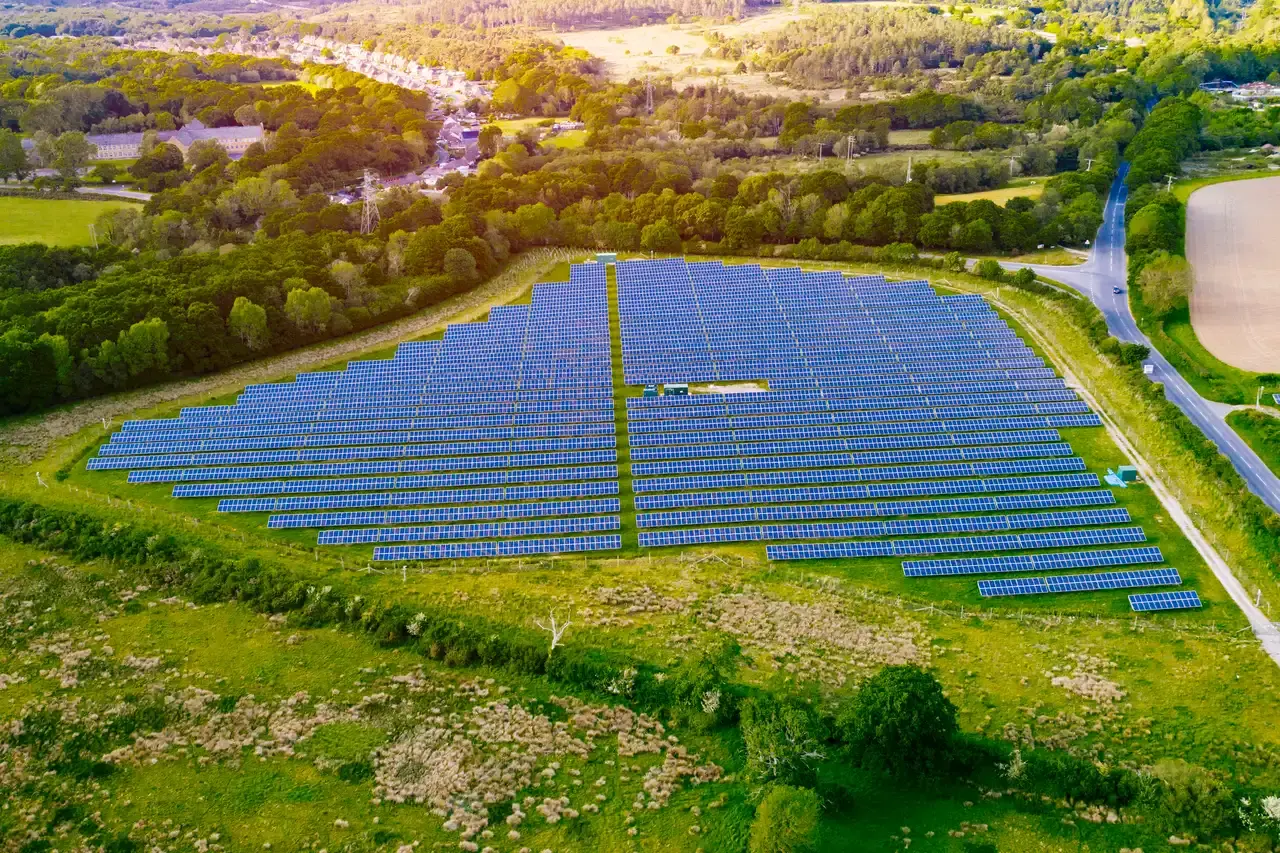
Community solar is a shared solar project that produces electricity for many subscribers at once, instead of for a single building. The project is built on a single site — typically a few dozen acres of agricultural land — and connects to the local utility grid. The electricity it produces is metered, and subscribers in the same utility territory receive credits on their utility bills proportional to their share of the project's output.
Community solar exists because not everyone can put solar on their own roof. Renters can't. Many homeowners can't, either — because of shading, roof orientation, or upfront cost. Community solar opens access to clean electricity to anyone with a utility bill, while delivering predictable income to the landowners who host the projects and tax revenue to the communities that host them.
Four steps, each done thoroughly.
Site feasibility
We start with a desktop assessment. Before asking for any site visit, we evaluate environmental constraints, regulatory frameworks, the local interconnection environment, and grid capacity. Most sites we look at don't make it past this stage — and that's the point. We don't waste a landowner's time, or our own, on projects that won't reach construction.
Land agreement
If a site clears feasibility, we present lease or purchase terms to the landowner in plain language. We strongly encourage independent attorney review. Nothing is signed under pressure. We've walked away from agreements when terms didn't sit right with a landowner; we'd rather lose a project than start a 25-year relationship the wrong way.
Development
The development phase typically runs 12 to 24 months. During this time we secure interconnection, county permits, state approvals, environmental clearances, and project financing. The landowner doesn't pay for any of this. Development is at our risk and on our balance sheet.
Construction
Once the project is fully developed and financed, construction begins. Most community solar projects build out in 6 to 9 months. The project reaches commercial operation, the local utility begins issuing credits to subscribers, and the landowner's annual lease payments begin.
Where we draw lines
What we won't do.
Some practices are common in our industry. We've made a deliberate choice not to follow them.
We won't speculate on land we don't intend to develop.
If a site won't make it to construction, we won't tie it up under a long-term option. The opportunity cost to a landowner is too high.
We won't sign agreements landowners don't fully understand.
Plain-language terms, encouraged independent review, and no deadline pressure.
We won't pave or permanently alter the land.
Foundations are driven posts, not poured concrete. The soil underneath remains soil.